Discover expert tips on corporate branding, behind-the-scenes looks at our recent projects, and announcements straight from our Kampala workshop.
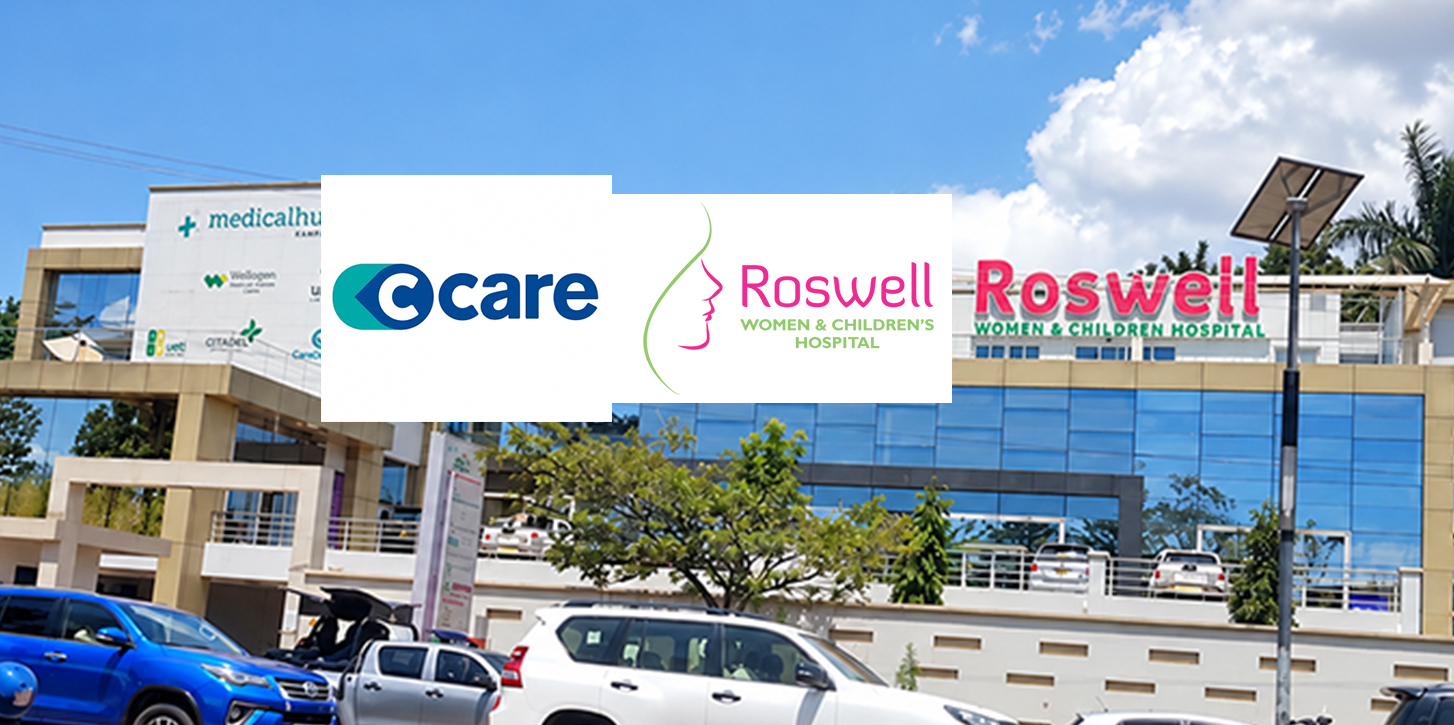
Kampala, Uganda – 29 October 2026 C-Care Uganda Acquires Roswell Hospital, Expands Network to Six Hospitals and 17 Clinics C-Care Uganda, one of the country’s leading private healthcare providers, has completed the acquisition of Roswell Hospital, a 30-bed multispecialty hospital located at The Medical Hub Complex, Plot 35 Yusuf Lule Road, Nakasero, Kampala, in a move that further strengthens its presence in Uganda’s growing private healthcare industry. The acquisition, which was completed on 8 September 2026 and officially announced on 15 October, brings C-Care’s healthcare network in Uganda to six hospitals and 17 clinics, reinforcing its position as one of the country’s largest private healthcare providers. The acquisition strengthens C-Care’s position in Uganda’s private healthcare sector, expanding its specialised services in women’s health, maternity, fertility and paediatric care.Roswell Hospital, which serves more than 30,000 patients annually, is recognised for its specialised services in women’s health, maternal and child care, gynaecology and fertility treatment. Its integration into the C-Care network is expected to strengthen access to specialised healthcare services while creating opportunities for investment in medical technology, infrastructure and patient care. The acquisition represents another milestone in C-Care’s expansion strategy as the healthcare group continues to invest in hospital infrastructure, specialised medical services and healthcare delivery across Uganda.Formerly operating as International Medical Group (IMG), C-Care has a history in Uganda dating back to 1996, when the healthcare business was established by Dr Ian Clarke. The group subsequently became part of Mauritius-based CIEL Group's healthcare investments and adopted the C-Care brand in 2022.Today, C-Care provides primary, secondary and tertiary healthcare services through a network of hospitals, outpatient clinics, diagnostic laboratories and pharmacies.Its flagship facility, C-Care International Hospital Kampala (IHK), formerly International Hospital Kampala, is recognised for providing specialised medical and surgical services, including cardiac care, advanced diagnostics and other complex medical procedures.The group also operates C-Care International Medical Centres (IMC), C-Lab diagnostic services and C-Pharma pharmacies, offering patients access to different levels of healthcare within its network.C-Care serves approximately 700,000 patients annually across its Ugandan operations, demonstrating the scale of its healthcare services.The Roswell acquisition follows other recent investments, including the upgrading of its Gulu outpatient facility into a 45-bed hospital and the elevation of its Mukono and Mbale facilities to full hospital status.These developments reflect C-Care’s strategy of expanding specialised medical services beyond Kampala while strengthening its capacity to serve patients across the country. Roswell Hospital brings specialised expertise in women’s and children's healthcareRoswell Hospital has established itself as a specialist healthcare provider in Kampala, with particular emphasis on women’s reproductive health, maternity services, paediatrics and fertility treatment.Founded by Ugandan medical practitioner Dr Malik Ssempebwa, the hospital has developed a patient base of more than 30,000 people annually.Its acquisition gives C-Care access to an established medical facility, specialist expertise and an existing patient network in Kampala’s Central Business District.Rather than establishing a new hospital from the ground up, the acquisition enables C-Care to build on Roswell’s existing operations while introducing additional resources, medical technology and operational systems.The hospital’s specialisation in maternal and child healthcare is particularly significant given the growing demand for specialised reproductive health services, fertility treatment and quality maternity care within Uganda’s private healthcare market. Azhar Sundhoo, Chief Executive Officer of C-Care East Africa, described the acquisition as an important step in the group’s growth strategy and its commitment to expanding access to quality healthcare in Uganda.“We are pleased to welcome Roswell Hospital into the C-Care family. This acquisition is an important step in our growth strategy and further strengthens our commitment to expanding access to quality healthcare in Uganda. We look forward to building on the hospital’s strong foundation and the opportunity this creates for our patients, teams and partners.”According to C-Care, the next phase will focus on integrating Roswell Hospital into its wider healthcare network, strengthening its operations and identifying opportunities to enhance the delivery of medical services.The group also intends to build on the hospital’s existing strengths while exploring opportunities to introduce improved medical technologies and systems. What the acquisition means for Uganda’s private healthcare sectorBeyond expanding C-Care’s network, the acquisition highlights the increasing role of private investment in the development of Uganda’s healthcare infrastructure.The country’s private healthcare sector continues to attract investment as demand grows for specialised medical services, modern diagnostic equipment, improved patient experiences and healthcare facilities capable of managing increasingly complex medical conditions.According to figures cited by the Daily Monitor from the Insurance Regulatory Authority, Uganda’s medical insurance gross written premiums increased from UGX 107 billion in 2014 to more than UGX 402 billion in 2024.This growth provides an indication of the expanding market for insured healthcare services, although significant affordability and access challenges remain.With Roswell Hospital now part of its network, C-Care’s immediate priority will be to integrate the facility into its existing operations while maintaining the specialised services and patient relationships that Roswell has developed.The financial terms of the acquisition have not been disclosed.For Uganda’s private healthcare industry, the transaction is another indication of growing investment in specialised medical services and the emergence of larger, integrated healthcare networks.As Uganda’s healthcare needs continue to evolve, investments such as the Roswell acquisition could play an important role in strengthening the country’s capacity to deliver specialised medical care.
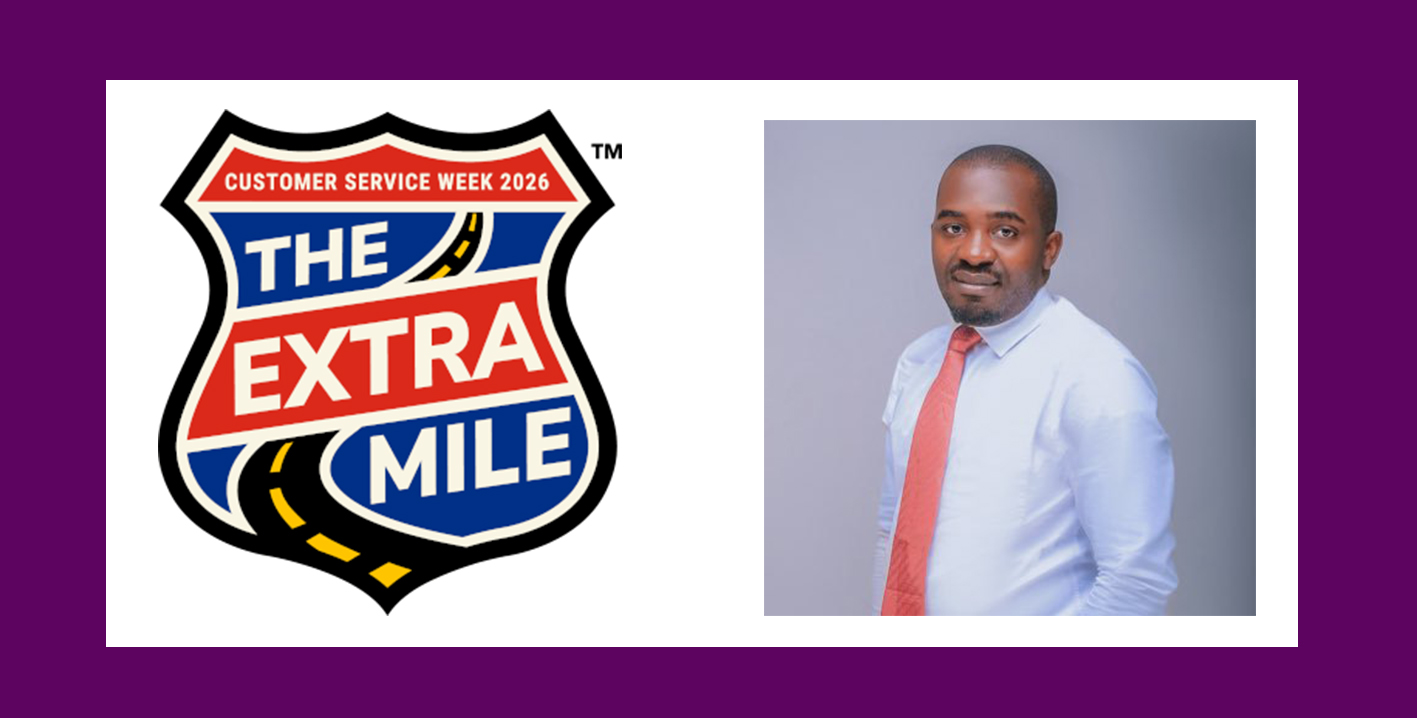
As businesses around the world mark Customer Service Week from October 5–9, 2026, under the theme “The Extra Mile,” Asaba James, Communications Manager at UGAFODE Microfinance, says the occasion presents an important opportunity for Small and Medium Enterprises (SMEs) to rethink how they serve, appreciate and listen to their customers.According to James, going the extra mile does not necessarily require a big budget or sophisticated customer service systems.“In my view, going the extra mile simply means doing a little more than the customer expects giving an update before they ask, following up after a purchase, keeping a promise, remembering their name or taking ownership of a complaint until it is resolved,” he says.James notes that some small business owners still view customer experience initiatives as something reserved for large companies.“Many times, I hear small business owners say, ‘Ebyo bya companies ennene nga MTN’—meaning, ‘Those are things for big companies like MTN.’ But whether you serve 10 customers or one million customers, they are all customers, and every customer wants to feel valued.”He encourages SMEs to use October to deliberately appreciate their customers through simple actions such as sending thank-you messages, writing personalised notes, calling customers by name, following up after a sale and recognising loyal customers.“The Baganda say, ‘Webale, webale emalawo ebintu.’ Sometimes a simple and genuine ‘thank you’ can take you a long way,” James says.He also encourages businesses to use Customer Service Month to collect valuable feedback rather than simply celebrating with posters, T-shirts and messages.“Ask your customers what you can do better. Even when they complain, thank them for speaking up. A complaint may reveal a problem that many other unhappy customers will never tell you about,” he says.Businesses should also try to experience their own services from the customer's perspective: How easy is it to make an inquiry, get a quotation, make a payment, receive an order or get assistance when something goes wrong?James further emphasizes that employees should not be forgotten during Customer Service Week, noting that staff who feel valued and supported are better positioned to provide positive customer experiences.“Appreciate and recognise the people who serve your customers every day. Happy and appreciated employees are more likely to create better customer experiences,” he says.Therefore, “Appreciate. Listen. Learn. And fix at least one thing that frustrates your customers. That could be your first step towards going the extra mile.” James cautions SMEs

Kampala — The Contivibe Media Webinar Series is creating a growing platform for entrepreneurs, SME owners, professionals and young people to access free practical business knowledge, interact with experienced industry practitioners and build networks that can support their businesses and careers. Launched in January 2026, the free monthly series was established as part of Contivibe Media's commitment to making business education more accessible and creating impact beyond the company's commercial activities. Since its launch, the Webinar Series has attracted more than 800 participants, with discussions covering personal and financial planning, business finance, changing consumer behaviour, marketing, sales, customer experience, personal branding and family business sustainability. Rather than focusing only on theory, each session brings in experienced professionals to share practical knowledge, real experiences and lessons participants can relate to their own businesses and careers. Starting the year with purpose and financial planningTo set the tone for the year, Contivibe Media started the series in January with "Purpose, Plan & Prosper – Real-Life Planning for Purposeful Living and Financial Stability." The session featured Chris Rubongoya, Founder and Director of Victors Junior Schools, and Sarah Apio, Brand and Communications Manager at KCB Bank Uganda. The discussion focused on starting the year with purpose, setting personal and financial goals and making deliberate decisions around financial stability. It created a foundation for the subsequent webinars by connecting personal planning with the discipline required to achieve longer-term financial and professional goals. Helping businesses understand finance in the digital eraIn February, the conversation moved to business growth and financial management with CPA Jim Gumoshabe, Finance Manager at Lifelink Medical Group, under the topic "Scaling Your Business Financially in the Digital Era." The session explored the financial side of growing a business and the importance of entrepreneurs understanding their numbers as their businesses expand. It also brought the digital environment into the conversation, helping participants appreciate that business growth requires not only generating revenue but also strengthening financial management and adapting to changes in how modern businesses operate. Responding to declining consumer purchasing powerIn March, Pearl Kitimbo, Brand and Communications Manager at Crown Beverages Limited, makers of Pepsi, joined the series for "Declining Consumer Purchasing Power: How Can Brands Grow When Customers Are Spending Cautiously?" The discussion addressed a challenge familiar to many businesses: what happens when customers still need products and services but have less disposable income and become more careful about their purchasing decisions? The session explored the importance of understanding changing customer behaviour and responding to a market where consumers increasingly evaluate what they buy, how much they spend and which brands continue to offer them value.Marketing when the budget is limited For many small businesses, visibility is important, but marketing budgets are often limited.Contivibe Media addressed this reality in April through "Limited Marketing Budgets: How Can SMEs Grow When Visibility Costs Keep Rising?", featuring Agnes Pamela Mubiru, Head of Marketing, Communications and Public Relations at Cairo Bank Uganda. The session challenged the assumption that effective marketing must always require large budgets.Participants explored practical approaches to visibility, including focusing resources on the right channels, using digital platforms more deliberately, building partnerships and referrals, and creating useful content that keeps a business visible to its customers. The discussion also emphasised the need for businesses to look beyond social-media likes and track whether their marketing activities are actually contributing to business growth. Turning leads into paying customersGenerating enquiries is one thing. Converting those enquiries into actual customers is another.That challenge shaped the May webinar, "Building a Simple Sales System: How to Turn Leads into Paying Customers," featuring Apollo Lubwama, Senior Manager, Home Broadband Sales and Distribution at MTN Uganda and Founder and CEO of Apollo Running Store. The session focused on building a deliberate sales process rather than waiting for customers to appear.Participants explored prospecting, lead qualification, follow-up, customer journeys and pipeline management, with the discussion highlighting consistency as an important part of converting opportunities into revenue. The session demonstrated that even a small business can create a simple system for identifying potential customers, following them up and tracking progress towards a sale. Helping businesses understand why customers leaveIn July, attention shifted from winning customers to keeping them. Leah Namuleme, Head of Customer Experience & Care at MultiChoice Uganda (DStv & GOtv) and a CIM Tutor, led a discussion on "Customer Experience: Why Businesses Lose Customers Without Knowing." The webinar explored the difference between customer service and customer experience and challenged businesses to look at the customer's entire journey rather than only responding when something goes wrong. One of the key areas discussed was the customer who leaves quietly. Not every dissatisfied customer complains; some simply stop buying. The session therefore encouraged businesses to deliberately understand customer experiences, identify points of frustration and create systems that strengthen customer retention and loyalty. Building personal brands that attract opportunitiesIn August, the series turned to the individual behind the business or profession. Contivibe Media hosted Viola Mboneko Rusoke, MCIM, LLB, Team Lead at Titanium Agency Ltd, for "Building a Personal Brand That Attracts Opportunities." The conversation explored how entrepreneurs and professionals can intentionally build visibility, credibility and reputation.Participants discussed how platforms such as LinkedIn and other digital channels can help professionals demonstrate their expertise, build relationships and position themselves for customers, partnerships, speaking engagements, career opportunities and stronger professional networks. The session reinforced the idea that having qualifications, experience or a good business may not always be enough if the people who need that expertise do not know about it. Building family businesses that can survive generationsIn September, the Webinar Series addressed another important area of business sustainability: family-owned enterprises.The session, "Family Business Challenges: Managing the Business, Money and Relationships," featured Margaret Kisitu Nakato, Co-Founder and Chief Executive Officer of Afros & Mo. Drawing from more than a decade of experience building a family business, Nakato shared lessons on professionalising family enterprises, separating business and personal finances, paying family members working in the business, patient capital, accountability and building structures that allow businesses to operate beyond their founders. The conversation also explored managing relatives as employees, working with spouses, preparing children to understand the family business and planning for succession and preservation of family wealth. The session highlighted that family relationships may help people start businesses together, but sustaining those businesses across generations requires professional systems, financial discipline, clearly defined roles and deliberate succession planning. With more than 800 participants reached since January, the impact is therefore not only in the number of people attending. It is also in the practical knowledge shared and the community of entrepreneurs and professionals being connected through the monthly conversations. More conversations to comeThe Contivibe Media Free Webinar Series will continue through the remaining months of 2026, with additional speakers and practical topics planned to complete the year. Upcoming topics, guest speakers, dates and participation details will be announced through Contivibe Media's digital channels.

KAMPALA — Tier IV financial institutions have been urged to strengthen governance, internal systems and risk-management frameworks as they embrace digital transformation and respond to emerging risks in Uganda’s financial sector. The call was made at the Founders, Directors and Board Members Conference, organised by the Association of Non-Deposit Taking Microfinance Institutions (ANDT) at MoTIV Creations in Bugolobi, Kampala.Held under the theme “Built to Last: Governance, Leadership and Transformation for Sustainable Tier 4 Institutions,” the conference brought together founders, directors, board members, government officials, development partners and other financial-sector stakeholders to discuss governance, leadership, access to finance, digital transformation and institutional sustainability. ANDT Chairman Raymond Kiwanuka said the gathering was intended to help build stronger institutions that serve communities responsibly, advance financial inclusion and contribute to Uganda’s economic development.The Tier IV sector comprises Savings and Credit Cooperative Organisations (SACCOs), non-deposit-taking microfinance institutions, money lenders and Village Savings and Loan Associations (VSLAs), many of which provide financial services to communities, small businesses and individuals outside the traditional commercial banking system.Speaking at the conference, Serena Cavicchi, Senior Social Development Specialist at the World Bank and Task Team Lead for the GROW Project in Uganda, highlighted interventions aimed at expanding opportunities for women entrepreneurs through access to finance, entrepreneurship support, training and apprenticeships.Cavicchi highlighted the importance of combining access to capital with business skills and other support that enables women entrepreneurs to strengthen their enterprises. The GROW programme has also increasingly focused on measuring results beyond the number of loans issued, including business turnover, job creation, productivity, formalisation and resilience.The Generating Growth Opportunities and Productivity for Women Enterprises (GROW Project) is implemented by the Government of Uganda through the Ministry of Gender, Labour and Social Development and the Private Sector Foundation Uganda (PSFU), with financing from the World Bank.Participants were also urged to strengthen institutional planning by putting in place clear budgets, work plans and strategies, supported by appropriate systems and partnerships to enable their institutions to operate sustainably.Hon. Shartsi Kutesa Musherure, Minister of State for Finance, Planning and Economic Development in charge of Microfinance, challenged Tier IV institutions to embrace digital transformation, strengthen governance and invest in their people to remain sustainable and serve customers more effectively.Musherure said Tier IV institutions play a critical role in advancing financial inclusion by reaching people who may not be adequately served by commercial banks, including farmers, market vendors and small entrepreneurs who may lack conventional collateral.She said the Government has established a regulatory framework through the Tier 4 Microfinance Institutions and Money Lenders Act aimed at strengthening institutional governance, protecting customers and supporting the sustainable development of the sector.The Minister also called on boards and directors to understand their fiduciary responsibilities, maintain a clear separation between governance and management, ensure transparent financial reporting, manage risks prudently and remain accountable to members and customers.“Where governance is weak, even the well-capitalized institution will crumble. Where governance is strong, even modest institutions can endure for generations,” Musherure said.She called for stronger collaboration between government and the sector in capacity building and training for boards and management, alongside improved data and information sharing to support policy and evidence-based decision-making.Musherure also linked the transformation of Tier IV institutions to the Government’s Tenfold Growth Strategy, highlighting the contribution stronger and more efficient financial institutions can make towards enterprise growth and Uganda’s wider economic transformation.Compliance Must Become Part of Institutional CultureCompliance was another major issue highlighted during the conference, with institutions urged to make it part of their organisational culture and strengthen internal controls that support accountability and sound decision-making.Boards and management teams were encouraged to establish clear risk-management strategies to identify, assess and respond to operational, financial, regulatory and technological risks.Institutions were also urged to strengthen governance structures that clearly define the responsibilities of boards and management and provide effective oversight of institutional operations.The conference further highlighted the importance of institutions having the right systems, partnerships, work plans and budgets to support their strategies rather than allowing institutional growth to outpace their internal capacity.Digital Transformation Brings Opportunities and New RisksDigital transformation featured prominently at the conference, with institutions encouraged to adopt technology to improve efficiency, strengthen decision-making and deliver financial services more effectively.Musherure said the microfinance sector is operating in an environment increasingly shaped by digital financial services, changing consumer expectations and emerging risks, including cyber threats.She challenged institutions to invest in digital record-keeping, mobile money integration and professional development for staff and boards, while building cultures of continuous improvement.“Transformation is not a threat – it is an opportunity to serve your members and customers better and more efficiently,” she said.Adebowale Atobatele, Chief Executive Officer of Armada Credit Bureau urged participants to put in place cybersecurity measures and fraud-prevention systems capable of protecting both institutions and their customers as transactions and other financial services increasingly move onto digital platforms.The conference also highlighted risks associated with digital lending, particularly around the collection, storage and use of customer information.Institutions were encouraged to understand the risks accompanying digital transformation and strengthen safeguards around customer data as they expand digital lending and other technology-enabled financial services.MFIs Encouraged to Strengthen ESG ReportingThe conference also called on Tier IV financial institutions to incorporate Environmental, Social and Governance (ESG) reporting into their institutional reporting systems.Institutions were encouraged to strengthen how they capture and report the wider impact of their operations alongside financial performance.For microfinance institutions serving women entrepreneurs, farmers, young people, small businesses and underserved communities, ESG reporting provides a framework for demonstrating how their activities contribute to enterprise development, livelihoods, employment and financial inclusion.The discussions also highlighted the growing importance of responsible governance and the ability of institutions to demonstrate their social and environmental impact as they engage regulators, development partners, investors and the communities they serve.
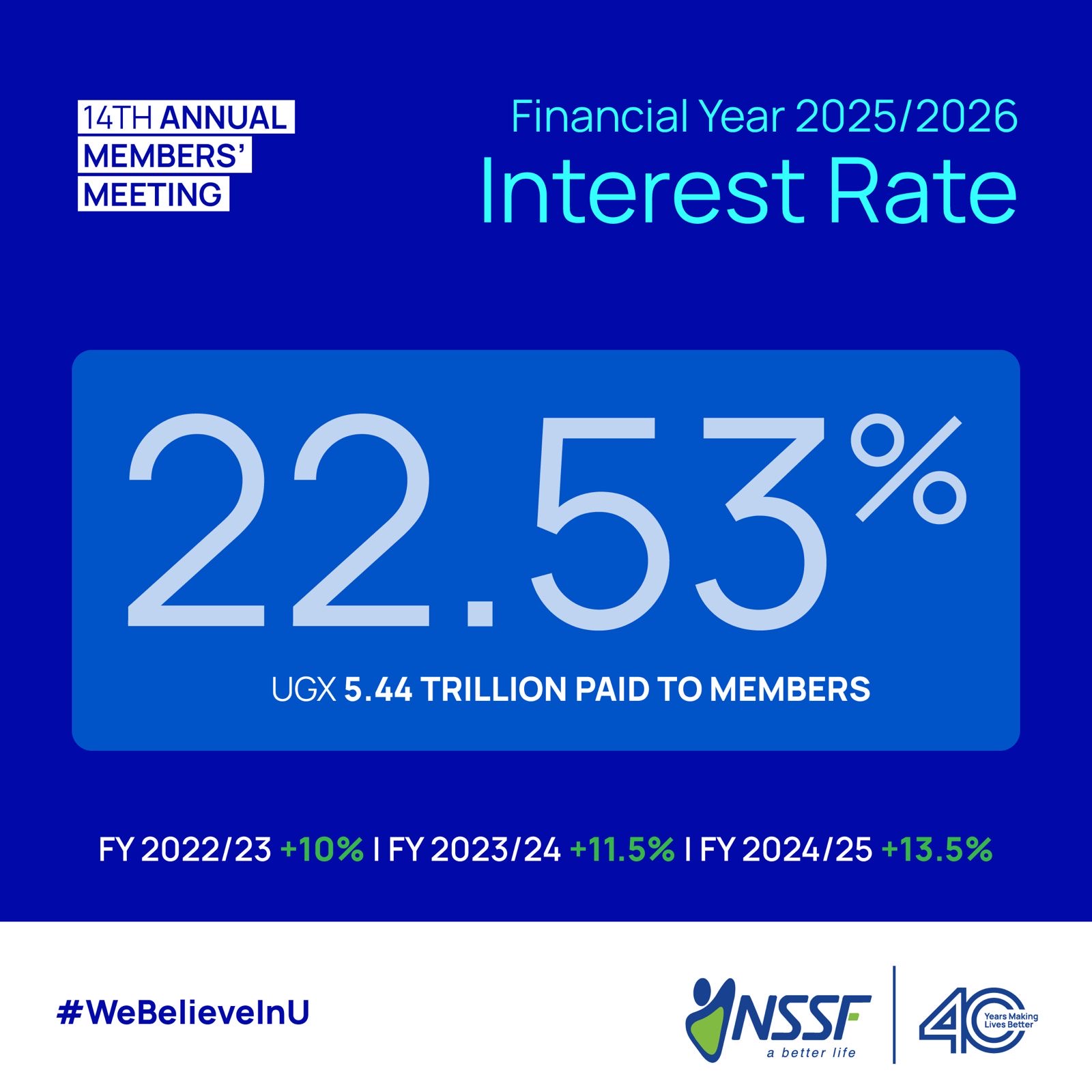
KAMPALA — The National Social Security Fund (NSSF) has declared a record 22.53% interest rate on members' savings for the 2025/26 financial year, the highest in the Fund's 40-year history.A total of Shs5.44 trillion will be credited to members' accounts — the largest annual payout ever and about Shs2.64 trillion more than last year.Finance Minister Henry Musasizi announced the rate on Thursday during NSSF's 14th Annual Members' Meeting in Kampala, following the Fund's performance for the year ended June 30, 2026."The interest amounting to Shs5.44 trillion, which will be shared by the members, is the highest interest rate in the history of the fund," Musasizi told the gathering. He said the result reflected "record-level performance of the Fund."The new rate is a sharp jump from 13.5% declared for 2024/25 and 11.5% for 2023/24. It also surpasses the previous record of 15% paid for 2017/18 under former Managing Director Richard Byarugaba. Rates had dipped to 9.65% in 2021/22 before climbing again.The interest will be credited to qualifying balances in line with Section 36 of the NSSF Act. The amount each member receives depends on their opening balance for the year, minus benefits paid during the period.NSSF Managing Director Patrick Ayota, who presented the year's results, said the Fund's total income rose 85% from Shs3.51 trillion to about Shs6.51 trillion, while assets under management grew 26% to Shs32.87 trillion. This puts the Fund on course towards its Vision 2030 target of Shs80 trillion.Member contributions increased to Shs2.42 trillion, up from Shs2.13 trillion in 2024/25. Realised income — interest, dividends and rent — rose to about Shs3.88 trillion, with interest income from bonds at Shs3.49 trillion and dividends at Shs369 billion.Ayota attributed the surge to stronger investment returns and unrealised (mark-to-market) gains on bonds and equities as regional stock markets rallied. Equities rose to 18.4% of the portfolio from 13.3% a year earlier, while fixed income remained the core at about 76.5%.He noted that Shs4.32 trillion is invested in Uganda, about 76% of it in government bonds."We impact the nation in three ways: through our investments, our operations, and our payouts to members," Ayota said.Benefits paid out climbed 17% to Shs1.549 trillion, reaching more than 46,000 members. The average turnaround time for benefit payments fell to about 4.5 days.The Fund now has 3.6 million registered members, although about 2.7 million currently have balances on their accounts. Ayota said many of the remaining accounts belong to members who have already received their benefits.NSSF has a standing "return promise" to pay at least two percentage points above the 10-year average inflation rate, now about 3.7%. The 22.53% rate far exceeds that floor.The Auditor General, Edward Akol, said KPMG Certified Public Accountants had audited the Fund's financial statements on his behalf, covering its financial position as at June 30, 2026, its changes in net assets and reserves, cash flows and accompanying notes."In my opinion, the accompanying financial statements present the true and fair view of the financial position of the Fund," Akol said.Minister of Gender, Labour and Social Development, Gen Henry Tumukunde, said: "Social security funds are an important driver of economic growth and development, and they should be managed in a way that creates sustainable value for workers, businesses, and the wider economy."At the meeting, Ayota also unveiled NSSF's Vision 2035, which he said is built around increasing both Ugandans' willingness and capacity to save, as it pursues a target of 15 million members and assets of Shs80 trillion.Members and the public reacted with excitement shortly after the announcement. "Today is like Xmas for NSSF members," one attendee wrote as the meeting was being streamed. Others posted in different WhatsApp groups, "Money has come" and "Thank you NSSF."
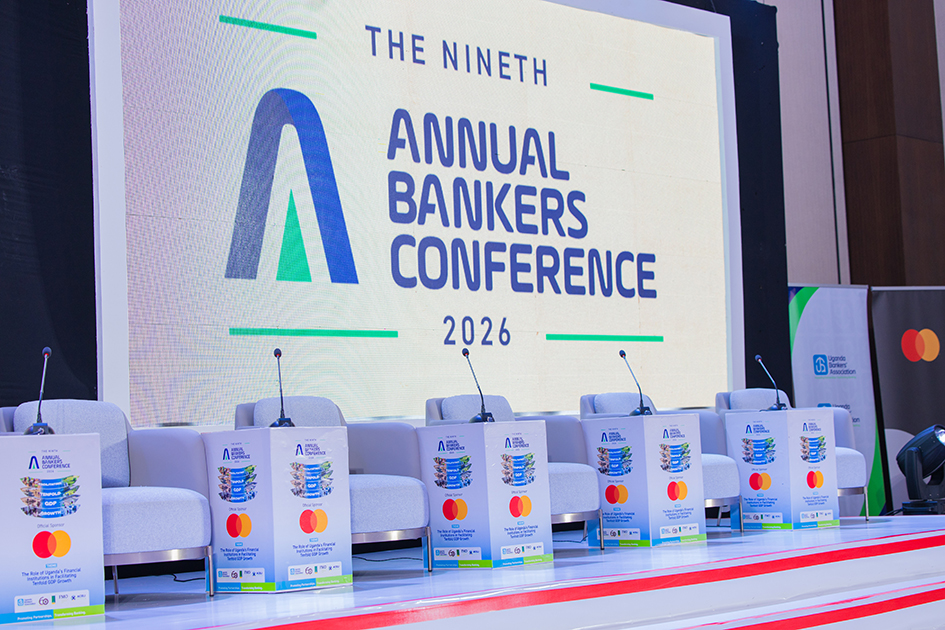
KAMPALA, UGANDA — Financial sector leaders, government officials, regulators, development partners and private-sector players have called for stronger collaboration to mobilize the long-term and affordable capital needed to finance Uganda’s ambition of growing its economy tenfold to USD 500 billion by 2040. The call was made at the 9th Annual Bankers Conference 2026, organised by the Uganda Bankers’ Association (UBA) on 18th September at the Marriott Hotel in Kampala. Bringing together stakeholders from government, the Bank of Uganda, financial institutions, capital markets, development partners, technology companies, the private sector and academia, the conference focused on how Uganda can mobilise and channel financing towards the sectors expected to drive the country’s long-term economic transformation. Organized under the theme “The Role of Uganda’s Financial Institutions in Facilitating Tenfold GDP Growth,” the conference focused on how Uganda’s financial sector and its partners can mobilize and channel the scale of capital required to support the country’s long-term economic transformation. Uganda’s Tenfold Growth Strategy seeks to expand the economy from approximately USD 50 billion to USD 500 billion by 2040. The growth agenda is anchored on four priority areas — Agro-Industrialisation, Tourism, Minerals including Oil and Gas, and Science, Technology and Innovation (ATMS), which are expected to drive increased production, investment, value addition, exports and job creation. A major message from the conference was that financing an economic transformation of this scale cannot be undertaken by government or the banking sector alone. It will require stronger collaboration among commercial banks, government, capital markets, pension funds, development finance institutions, investors, technology companies and development partners to mobilize capital and share financing risks. Discussions also highlighted the need for Uganda’s financing models to increasingly move beyond conventional short-term lending. Participants called for greater mobilization of patient capital, project finance, syndicated lending, capital-market financing, pension funds, development finance and other long-term financing mechanisms capable of supporting large-scale productive investments. The conference therefore provided a platform for stakeholders to discuss not only the amount of financing required to achieve Uganda’s tenfold growth ambition, but also where that capital will come from, how risks can be shared and how financing can be directed towards the productive sectors expected to drive the country’s next phase of economic growth. UBA: Uganda’s Growth Ambition Is Also a Financing ChallengeOpening the conference, Uganda Bankers’ Association Chairperson Michael Mugabi said the country’s USD 500 billion ambition should not be viewed simply as a government target, but as an investment, productivity, infrastructure, skills and financing challenge. According to Mugabi, economies grow when capital reaches productive opportunities, risks are shared and long-term savings are transformed into long-term investments. He also said that conventional bank credit alone would not provide the scale of financing required and called for greater mobilization of equity finance, pension funds, diaspora capital, development finance, sustainable finance and other investment products. “Ambition without execution is merely aspiration,” Mugabi said. He challenged conference participants to move beyond identifying financing constraints and instead develop practical solutions that can be implemented. “We need coordination, we need partnerships, we need collaboration,” Mugabi added, calling for actionable financing structures, reforms and investment-ready projects that government, financial institutions, investors and development partners can support. Musasizi: Government Cannot Finance Transformation AloneMinister of State for Finance, Planning and Economic Development Hon. Henry Musasizi said achieving Uganda’s tenfold growth ambition will require significantly greater participation by financial institutions and private investors because government cannot finance the transformation through the national budget alone. “The government cannot deliver Uganda’s transformation alone. We need you,” Musasizi told financial sector leaders at the conference. He said the scale of Uganda’s economic ambition must be matched by the scale and quality of financing available to the economy, particularly to sectors expected to drive the country’s growth. Musasizi made four major asks of Uganda’s financial sector: reduce the cost of credit, increase lending to the ATMS sectors, embrace long-term financing instruments and take financial inclusion to scale. On the cost of credit, he urged financial institutions to explore ways of making financing more affordable through improved credit assessment, better use of data and greater use of risk-sharing and credit-guarantee mechanisms. “Bring down the cost of credit,” Musasizi said, arguing that more affordable borrowing could unlock additional productive investment across the economy. His second call was for financial institutions to “lend to ATMS, not only trade,” saying the structure of lending should increasingly reflect the sectors Uganda expects to drive future economic growth. He said agro-industrialisation, tourism, minerals including oil and gas, and science, technology and innovation will require significant financing if they are to make the expected contribution to Uganda’s economy. Musasizi also called for greater use of long-term financing instruments, including infrastructure and project bonds, to support investments such as industrial parks, tourism facilities, infrastructure and mineral value addition. He further emphasised financial inclusion, saying farmers and other economically active Ugandans should be able to save, borrow, insure themselves, receive payments and invest. Financial inclusion, he said, should therefore move beyond simply opening access to financial services and become an instrument for economic transformation. Atingi-Ego: Banks Must Evolve from Lenders to ArrangersBank of Uganda Governor Dr. Michael Atingi-Ego said the scale of Uganda’s economic ambition requires financial institutions to rethink their traditional roles and strengthen their capacity to mobilise capital for productive investment. “This means that our institutions must evolve, from lenders to arrangers, from balance-sheet providers to capital-market participants, and from transaction bankers to strategic partners in national development,” Atingi-Ego said. He noted that Uganda’s priority sectors have different financing needs and cannot all be effectively served through conventional collateral-based lending models. Agro-industrialisation, for example, requires financing across processing, storage, value addition and export logistics, while tourism requires investment in hospitality and transport infrastructure. Minerals, including oil and gas, require patient and structured capital, while science, technology and innovation will increasingly require financial institutions to consider cash flows, intellectual property, technology and business ideas rather than relying only on physical collateral. The Governor stressed that banks cannot and should not attempt to finance Uganda’s transformation alone, pointing to pension funds, insurance companies, development finance institutions and capital markets as complementary sources of long-term capital. Atingi-Ego also challenged financial institutions to translate their commitments into measurable business strategies and credible plans for mobilising deposits, accessing longer-term funding and strengthening their capital positions. “A commitment that never reaches a balance sheet is only a speech,” Atingi-Ego added. He said the Bank of Uganda would follow the implementation of commitments made by financial institutions, putting emphasis on tangible results. “When this conference convenes next year, we will measure delivery, not declarations,” he said.Mastercard: Delivering the Ambition Will Require Everyone to Work Together Digital financial infrastructure also featured prominently in discussions on how Uganda can finance its next phase of economic growth. Speaking at the conference, Mr. Victor Ndlovu, Mastercard Vice President and Head of Business Development for East Africa, said Uganda’s tenfold growth ambition cannot be financed by the banking sector acting alone and will require collaboration across the wider financial ecosystem. “This year, the ambition on the table is as big as it gets. And delivering on that ambition will take all of us to work together,” Ndlovu said. He noted that achieving the country’s growth ambitions will require collaboration among banks, capital-market participants, development finance institutions, fintechs, technology companies and other private-sector players, with digital financial infrastructure playing an important role in expanding access to finance. He further explained that this is why the financing conversation needs to include not only banks, but also capital-market participants, development finance institutions, fintechs, technology companies and other private-sector players. “The banking sector cannot carry this alone,” he added. Mastercard also highlighted digitalization as an important multiplier in Uganda’s transformation, arguing that secure, inclusive and scalable digital financial infrastructure can help more farmers and SMEs establish transaction histories and financial footprints. Such information can help lenders better understand businesses and individuals who may have viable economic activities but lack traditional collateral or extensive formal financial records. Digitalization, the conference heard, should therefore be viewed not simply as a payments issue, but as an enabler of financial inclusion, access to capital and participation in the formal economy. Digital platforms could also support tourism, cross-border transactions, remittances and connections between Ugandan businesses and wider markets, while increased digitalisation will require continued investment in cybersecurity and trust. Netherlands: Sustainable Finance Must Support Uganda’s GrowthThe Kingdom of the Netherlands also reaffirmed its commitment to supporting the development of Uganda’s financial sector. Speaking at the conference, H.E. Angèle Samura, Ambassador of the Kingdom of the Netherlands to Uganda, highlighted ongoing partnerships supporting access to finance, agriculture, sustainable finance, climate-risk management and environmental, social and governance (ESG) practices. Speaking at the conference, the Netherlands Ambassador to Uganda said the financial sector has an important role to play in unlocking investment in the sectors at the center of Uganda’s growth ambitions. “What is particularly encouraging is that Uganda’s banking industry is not only responding to emerging challenges, such as climate risk, but is also positioning itself to unlock new opportunities in agriculture, tourism, mining, science, technology and innovation,” the Ambassador said. She highlighted partnerships through FMO, the Dutch entrepreneurial development bank, and other initiatives aimed at strengthening the capacity of financial institutions in practical ESG integration, climate-risk management, sustainable finance and sustainability reporting. The Ambassador also highlighted the importance of de-risking lending to agriculture and other high-impact sectors to enable private capital to increasingly reach businesses and communities that have traditionally struggled to access finance.She commended Uganda’s financial institutions and sector stakeholders for efforts towards strengthening sustainability and inclusion. “I commend the Uganda Bankers’ Association, the Bank of Uganda and all participating institutions for their leadership and commitment to building a more sustainable and inclusive financial sector,” she said. Patient Capital Emerges as Major Conference IssueOne of the strongest messages from the conference was the need for patient and long-term capital to finance investments whose development and repayment periods extend beyond those of ordinary commercial loans. Delivering the keynote address, Mr. Lodewijk Govaerts drew on experiences from emerging markets and Asian economies to demonstrate how long-term capital can be mobilised to finance large-scale infrastructure and productive investments. Govaerts noted that projects such as railways, roads, energy infrastructure, industrial parks, digital infrastructure, agro-processing facilities and mineral-processing projects typically require substantial capital and longer repayment periods, making them difficult to finance through conventional short-term commercial lending alone. Against this backdrop, he highlighted syndicated lending as one financing approach through which several financial institutions can jointly fund large projects while sharing the associated risks. He noted that such arrangements can also help local financial institutions develop the expertise required to structure and manage increasingly complex financing transactions. “It is not just syndicated lending in the short term. In the long term, it is not just in local currency; it is also in foreign currency,” Govaerts said while discussing the financing requirements of large-scale infrastructure projects. Drawing lessons from Asian economies, Govaerts explained that local banks can build their capacity by participating alongside institutions with greater experience in structuring large and complex financing arrangements. “Every syndicated transaction… will be a classroom,” he said, pointing to opportunities for financial institutions to strengthen capabilities in credit analysis, security structuring, documentation, book-building, monitoring and other aspects of complex financing. Govaerts also highlighted project finance as an important mechanism for infrastructure developments that require significant upfront investment before they begin generating revenue. Unlike conventional lending, he noted, repayment in project finance is closely linked to the successful completion and future cash flows of the project. Such financing therefore requires expertise beyond conventional credit assessment, including project structuring, engineering, risk allocation, legal documentation, environmental and social safeguards, and long-term project monitoring.Drawing on the experience of other emerging economies, Govaerts emphasised that financing Uganda’s transformation will require commercial banks, development finance institutions, government, capital markets and other investors to work together to mobilize the patient and long-term capital required for major infrastructure and productive-sector investments. From Funding Transactions to Funding TransformationBy bringing together policymakers, regulators, financial institutions, development partners, technology companies and private-sector leaders, the conference sought to address not simply how much capital Uganda requires, but where that capital will come from and how it can be structured to reach productive sectors. Achieving tenfold economic growth will require stronger collaboration between government and the private sector, deeper capital markets, greater mobilization of domestic savings, affordable credit, digitalization, risk-sharing mechanisms and financing products capable of supporting investments over longer periods. The conference discussions also underscored that no single institution or source of capital can finance the scale of transformation envisaged under Uganda’s Tenfold Growth Strategy. Banks will remain central to the financing agenda, but the conference highlighted the complementary roles of pension funds, insurance companies, development finance institutions, capital markets, technology companies, investors, development partners and government. The challenge for Uganda’s financial sector is therefore increasingly shifting from funding individual transactions to mobilizing and structuring capital capable of financing wider economic transformation. With Uganda targeting a USD 500 billion economy by 2040, the conference placed financing collaboration at the centre of the country’s growth agenda focusing attention on who will provide the capital, how that capital will be mobilized, how risks will be shared and how financing can reach the productive sectors expected to drive the country’s transformation.
Reach out directly via phone, email, or visit our office.
Kira Road near Total Acacia, Kampala
P.O Box 490530, Hoima Uganda
0760 249 354
sales@primedean.com
We set clear execution schedules from day one and commit strictly to your delivery date.